

Inside Jiaxuan Machinery’s Meat Processing Equipment Workshop
In our meat equipment workshop, several machines may appear to perform the same broad task: cutting meat. The differences become clear when we put a real ingredient beside each one. A chilled boneless piece intended for strips, a hard-frozen block intended for flat slices and a product requiring small cubes do not enter a cutter in the same condition. We use the workshop to discuss those starting conditions and show how a suitable cutting setup would be evaluated.

Compare the job before comparing the machine
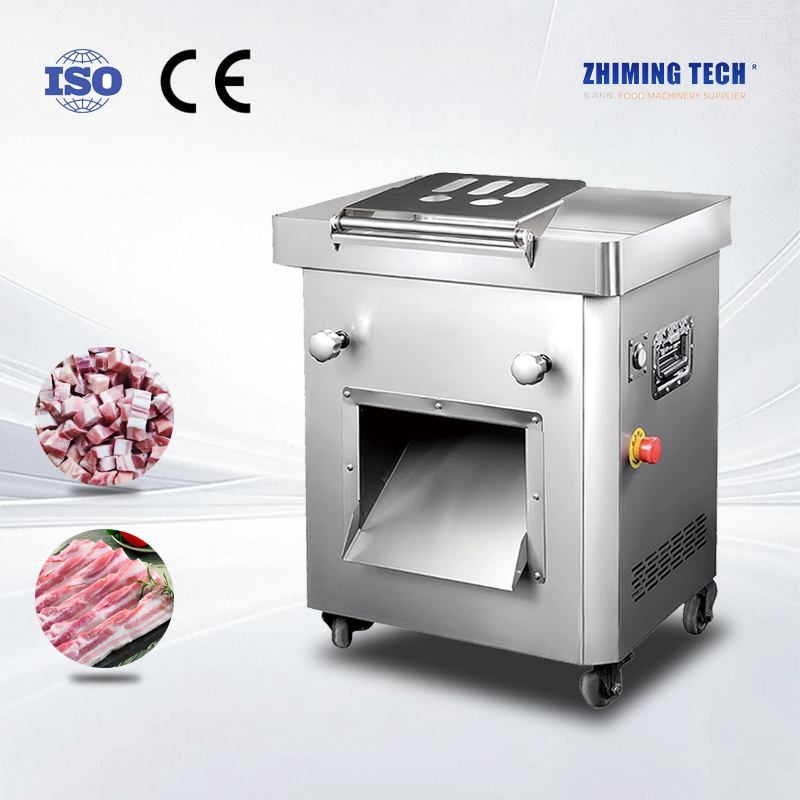
For prepared boneless meat that needs slices, strips or cubes, we can assess the knife arrangements of the JX-300 meat cutting machine. When the starting material is a hard-frozen block and the target is a portioned slice, we discuss the feed and gripping process of the JX-25 frozen meat slicer. The JX-100 dicing machine addresses another dicing task. The names are only a shortlist; the raw material and finished cut decide what should be tested.
A useful conversation starts with a product sample or clear photos, incoming temperature, starting dimensions, desired shape and the operation after cutting. We can then separate questions of machine fit, cut quality and production handling. An hourly capacity on a nameplate does not answer all three.
What we look at during a workshop demonstration
Feed: does the prepared piece enter and stay controlled without forcing it?
Cut: do the first, middle and final portions meet the requested shape?
Outlet: can staff collect the product and transfer it to the next operation without disrupting the flow?
Changeover: which knife group, cleaning access or operating adjustment is needed for the next SKU?
These checks give a buyer something concrete to compare across machines. When a special ingredient or cut is involved, we would use the buyer's own material for a separate trial rather than assume a general demonstration represents their production.
Document the selected configuration
Before an order is finalized, the model, knife set or accessories, voltage, safeguards, cleaning approach and operating instructions should be recorded for the specific machine. Requirements vary by product and destination market. A workshop discussion is most useful when it ends with a written specification that the buyer and our team can both check.
For a project involving several machines, we also review the preparation before the cutter, collection after it and available floor space. Browse our meat processing equipment range to identify a starting point, then contact Jiaxuan Machinery with the raw ingredient and finished-cut example for a workshop discussion.
Flowing: