

Dumpling Machine Recipe Trials: Wrapper, Filling and Seal
A dumpling machine recipe trial should show that the prepared dough sheets consistently, the filling is delivered predictably and the formed dumpling stays closed through its intended handling. Check these as separate stages before accepting the complete product. A mold can define a shape, but it does not establish compatibility with every flour, filling texture or finished-product requirement.
Jiaxuan Machinery’s JX-200 automatic dumpling making machine combines dough sheeting, filling, sealing, forming and conveyor discharge. Its product description identifies dough formula, wrapper thickness, filling consistency, mold and settings as factors in the outcome. Prepared dough and filling must be supplied separately; mixing, cooking, freezing and packaging are not functions of this machine.
Keep the recipe and the product target in the same record
Specify the intended dumpling shape, dimensions, total weight, wrapper thickness and filling proportion. State whether measurements apply immediately after forming or at a later product stage. Attach a representative acceptable sample or photograph so a buyer and supplier can judge the same target.
Record the flour and dough recipe version, preparation method and condition at loading. For the filling, record ingredients, particle size, mixing method and consistency. The product page allows different properly prepared savory or sweet fillings, while warning against particles too large for the filling system. It does not establish a universal maximum particle size or dough water ratio for every recipe; obtain confirmation for the proposed setup.
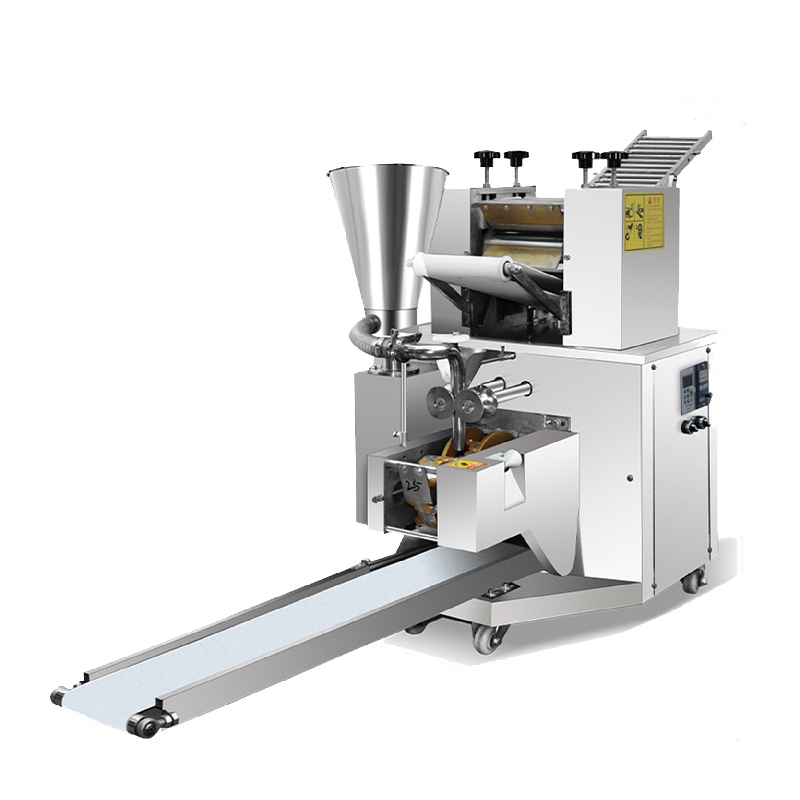
Existing equipment image from the dumpling machine product page. Evaluate the proposed recipe and forming mold using representative material.
Locate the first point where the product changes
Follow a representative run from sheeting to filling, forming and collection. Record the first visible defect rather than treating every rejected dumpling as a sealing failure. A wrapper already damaged before forming raises a different question from an intact dumpling that opens after transfer.
The following is a proposed observation record. It helps a supplier review the recipe and configuration; it does not prescribe changes to rollers, guards, pressure or other machine components.
| Observation | Evidence to record | Question to resolve |
|---|---|---|
| Wrapper varies or tears before forming | Recipe version, wrapper condition and thickness at an agreed sampling point | Can the supplied dough and proposed sheeting setup deliver an acceptable wrapper before filling is added? |
| Filling delivery varies | Filling consistency, inclusion size and portion observations during the same run | Is the prepared filling compatible with the proposed delivery system and product target? |
| Filling appears in the seam or closure is incomplete | Seam appearance, wrapper and filling settings, location of residue or gaps | Does the combination leave a clean, consistently closed edge at the required filling amount? |
| Dumplings leave intact but open or deform later | Condition at discharge and after the actual tray transfer or next process | Is the defect introduced during forming, ordinary handling or the separate downstream process? |
Inspect material and samples from the normal production process. Any machine inspection, cleaning or adjustment should follow the supplied operating instructions. A recipe trial is not a substitute for those instructions.
Change one defined factor and keep the comparison traceable
If dough, filling, mold and output target change at once, an improved result cannot be attributed confidently to one cause. Keep a baseline record and identify each approved change. After a change, compare the same product attributes using material prepared in a comparable way.
For a vegetable filling, include the condition of the prepared vegetables and the consistency of the mixed filling. Our vegetable cutting guide for mixed preparation menus addresses the separate upstream cutting task. Choosing a vegetable cutter does not by itself confirm that the completed filling will feed and seal successfully in a dumpling former.
Record what happens as production continues and material is replenished. A handful of acceptable dumplings at the beginning does not answer whether the same recipe remains workable throughout the intended run. Keep interruptions, rejected pieces and manual corrections in the record.
Accept the dumpling where the buyer will use it
For a product collected into trays, inspect the seam and shape after normal transfer. For a frozen-food project, use the buyer’s normal separately controlled freezing and subsequent preparation process to evaluate product quality. For a cooking application, assess the product using the intended cooking method under the buyer’s established procedures. No universal freezing or cooking settings are specified here.
Compare the same sample group where practical and note the stage at which a change first appears. This separates forming quality from the effects of the next operation. A visible seal assessment also does not establish food safety or validate a thermal process; those require the producer’s own controls.
Agree on acceptance limits before running the sample: weight and dimensional variation, permitted seam defects, reject count and the number of products needing manual correction. Record accepted dumplings over the complete comparison interval, together with replenishment, collection and other included work. The product page’s maximum rate is a configuration-dependent specification, not the accepted output of an untested recipe.
Questions buyers should resolve with a sample
Can total dumpling weight prove the wrapper-to-filling ratio?
No. The same total weight can contain different wrapper and filling amounts. Define an agreed sample method for assessing the components as well as the complete product. Keep the recipe and settings with that result instead of approving the ratio from total weight alone.
Does a change of mold establish a new recipe automatically?
No. The mold changes the intended geometry. A different filling or wrapper still needs evaluation for delivery, closure and handling. Confirm shape and dimensions alongside recipe suitability rather than treating mold availability as a finished-product guarantee.
Prepare a useful dumpling production enquiry
Send the target shape and dimensions, total weight and component proportion, wrapper requirement, dough recipe and preparation condition, filling type and particle size, and an acceptable finished-product example. Include the intended next operation, required accepted output, existing loading and collection workflow, available space, destination country and electrical supply.
Send Jiaxuan Machinery your dumpling recipe, product target and trial requirements so the proposed mold and configuration can be discussed against both the forming process and the finished product.
Flowing: