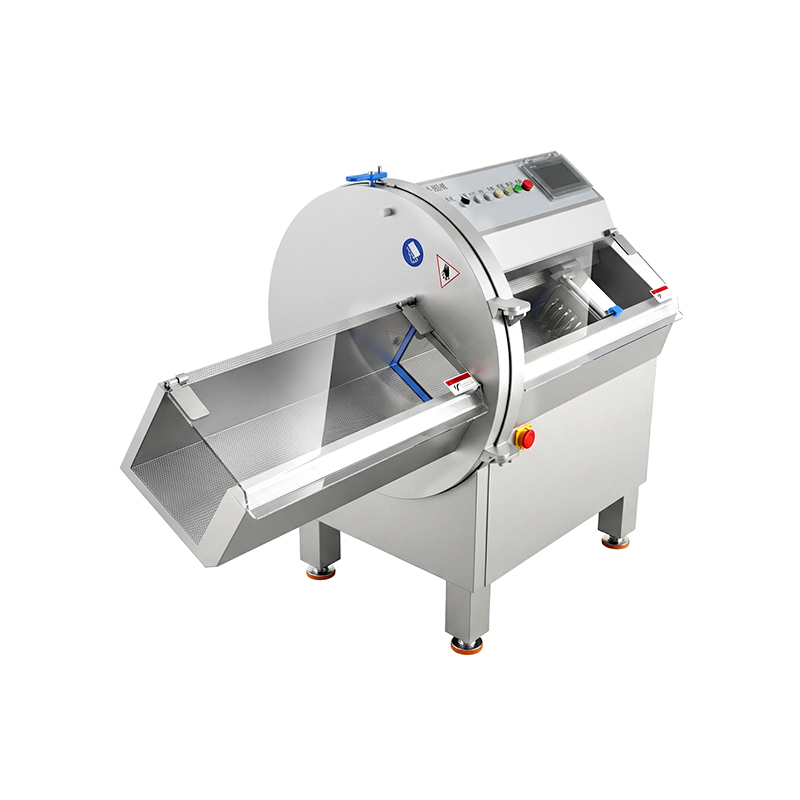


From Slices to Cubes: How We Configure the JX-300 Meat Cutter
In a meat workshop, “cutting” can mean three different finished products. A slice needs a controlled thickness; a strip needs that thickness plus a second dimension; a cube needs three controlled dimensions. We configure the JX-300 industrial meat cutting machine around the required result, rather than treating slicing, strip cutting and dicing as interchangeable settings. The removable knife group lets one compact unit handle several jobs when the blade arrangement and feed method match the ingredient.

Slices, strips and cubes require different cutting paths
Our first question is what the buyer wants to pack or cook. For meat slices, the cut thickness and evenness matter. For meat strips, we also ask for the desired strip width and length. For diced meat, we need the intended cube dimensions and acceptable variation. These decisions determine the knife spacing, blade set and how the prepared meat is presented to the cutter.
Slicing: prepare a piece that fits the feed inlet, select the slicing knife arrangement and make the initial cut. This creates the first controlled dimension.
Strip cutting: reorient the sliced material for a further cut with the appropriate knife configuration. The second direction establishes the strip width; the prepared piece also affects the final length.
Dicing: a further cut across prepared strips establishes the remaining dimension. The sequence and handling should be checked with the actual meat, since a nominal knife spacing alone cannot guarantee a particular cube appearance.
The important distinction is that the three finished formats are process choices. They should not be read as a promise that one feed pass produces slices, strips and cubes simultaneously. When the product changes, we confirm the matching knife group and cutting sequence before production starts.
Observe the feed and outlet during the cut
In the JX-300 trial video, focus on how prepared material enters the machine and how the cut product is discharged. For a purchase decision, we then run the buyer’s own meat through the required knife group and measure the resulting slices, strips or cubes.
The feed opening and raw material set the practical limits
The JX-300 feed inlet is 80 × 280 mm. Meat should be prepared to enter the opening without forcing it; feed dimensions do not describe the size of a finished cube. Product temperature and texture also change how well a shape holds after cutting. For regular slices and cubes, we would test representative fresh or lightly chilled boneless material in its intended production condition, then inspect the output rather than infer the result from a photograph.
We position this machine primarily for prepared beef, pork, lamb and poultry. The meat slicing, strip cutting and dicing setup is especially relevant to central kitchens, butcher operations and prepared meal lines that use several cut formats during a shift. Hard frozen blocks and hard bones call for different equipment. If a buyer wants to process small bone-in poultry sections, soft cartilage or an unusual ingredient, we would confirm feasibility by sample trial and blade specification first.
JX-300 technical data
| Item | JX-300 specification |
|---|---|
| Operating voltage | 220 / 380 V |
| Power | 2.2 kW |
| Feed inlet dimensions | 80 × 280 mm |
| Listed cut size | 2.5–280 mm; confirm the required blade configuration and finished dimensions |
| Listed production capacity | 800 kg/h |
| Machine weight | 80 kg |
| Machine dimensions | 480 × 600 × 730 mm |
The 800 kg/h production capacity is a listed equipment figure, not a guaranteed output for every ingredient or cut. A multi-pass dicing job, for example, requires additional handling. Actual throughput depends on preparation, feed rate, texture, temperature, blade selection and the finished specification. Confirm the available voltage and the exact knife set with us before ordering.
Changing knife groups between product formats
The removable knife group is valuable when a kitchen changes from slices to strips or cubes, and when the cutting area must be cleaned. Stop the machine and isolate its power before removing or handling blades. Clean and inspect the knife group and food-contact surfaces according to the operating instructions, then reassemble and verify the setup before feeding the next batch. A change of ingredient may also require the site's own allergen and sanitation procedure.
For a meaningful sample trial, send us four details: the raw material and its temperature, the starting piece dimensions, a photo or sample of the target shape, and the intended hourly volume. We can then propose a knife arrangement, test the target cut and discuss realistic handling and throughput. This is a better basis for selecting a multifunctional meat cutter than relying on a single advertised range.
See the JX-300 meat cutting machine specifications and product images, browse our meat processing equipment, or contact Jiaxuan Machinery with your sample and cut requirements.
Flowing: