

Inside the JX-25 Frozen Meat Slicer: From Block to Slice
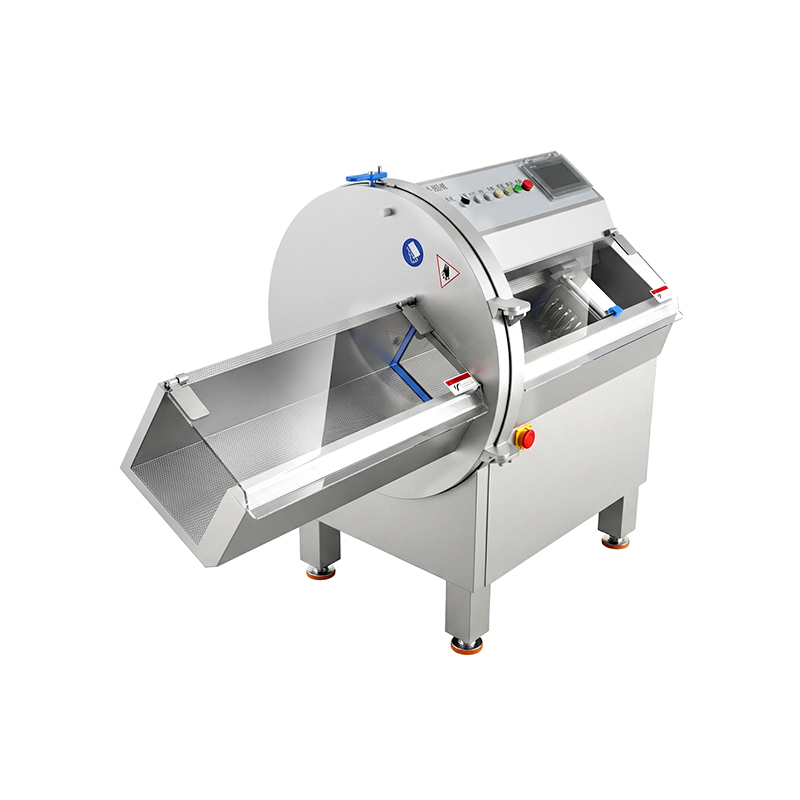
A request for “10 mm meat slices” sounds straightforward. On a production floor, the first question is whether the meat block can be held and advanced consistently through the entire cut, including the last pieces. Jiaxuan Machinery’s JX-25 automatic frozen meat slicer and portion cutter is designed around that problem: a product gripper steadies the raw material while a controlled feeding system presents it to the blade. This closer look explains the cutting sequence and the checks a buyer should make with their own product.
Will the block stay controlled to the final slice?
Before setting a slice thickness, define the input: beef, pork, lamb, bacon, suitable ribs or another product; boneless or bone-in; its dimensions, temperature, shape and fat-to-lean structure. The JX-25 is specified for a maximum product length of 600 mm and an approximate maximum cross-section of 250 × 210 mm. These dimensions help screen a sample for fit, but a piece that fits the chamber still needs to feed securely and cut cleanly.
For appropriately prepared material, we use approximately 0°C to −8°C as a reference range for a cutting trial. It does not mean that all meats behave alike at the same thermometer reading. Surface hardness, core temperature, bone structure and fat content can all affect the cut. Very hard or densely boned pieces warrant an individual trial before a machine configuration is confirmed.
From gripper contact to discharge
Load: Place a prepared block in the inclined feeding chamber in an orientation that allows stable contact with the gripper and feed mechanism.
Hold: The product gripper restrains the block as it is advanced. This matters most when an uneven surface might shift or rotate during repeated cutting.
Advance and cut: The dynamic feed presents material to the blade according to the selected thickness. Consistency depends on both the setting and the block remaining stable through the cycle.
Discharge: Finished slices move away on the conveyor for collection or the next operation. The operator can then inspect the face of the cut and any remaining end piece.
This sequence is why a test should show the feeding and gripping process as well as the finished slices. A photograph of a neat stack cannot reveal whether the last pieces stayed aligned or how much material remained after cutting.
Thickness control is different from weight control
The JX-25 offers an adjustable slice thickness of 1–30 mm. For a processor targeting, for example, 10 mm slices, the useful test is to measure pieces taken from the beginning, middle and end of the same block and to note changes in appearance or breakage. A stable thickness setting supports repeatable cutting, but it does not by itself make every portion the same weight: a tapered block has a changing cross-section.
The published cutting speed reaches up to 210 cuts per minute under suitable conditions. Cuts per minute and kilograms per hour answer different questions. Actual mass output depends on block size, target thickness, loading rhythm, product temperature and time spent handling end pieces. For planning a line, record the input mass, usable output and elapsed time during a representative run rather than converting the maximum cutting rate into a guaranteed hourly yield.
Which products deserve a separate sample test?
| Material | What to verify |
|---|---|
| Boneless beef or pork blocks | Fit, holding stability, slice face and the remaining end piece at the chosen thickness. |
| Bacon or pork belly | Whether the lean and fat layers stay together and whether pieces deform during discharge. |
| Suitable ribs or chops | Bone size and density, cut surface and blade suitability; large or exceptionally dense bones require prior evaluation. |
| Selected fish products | Firmness, shape stability and the condition of the finished slices. |
The table is a trial checklist, not a statement that one setup will suit every product. The frozen meat portion cutter is primarily a slicing machine; it does not dice meat or weigh each piece individually. Define the saleable cut and reject criteria before judging whether it suits a particular line.
Measure the first, middle and last slices
Bring representative material, including the smallest and largest normal blocks and any difficult bone-in or uneven pieces. Agree on a target thickness and a realistic operating temperature. During the run, capture the gripper and feed path, then collect slices from the beginning, middle and end. Measure thickness at the same points, weigh portions if weight matters to the buyer, and record visible damage, broken pieces and the remaining end piece.
Finally, note the number of blocks processed, usable mass and actual operating time; include loading and collection if those steps limit the line. Review access for routine cleaning and the space needed at the infeed and discharge sides. This information is more useful for equipment selection than an isolated maximum-speed figure, and it gives Jiaxuan’s engineers a clear basis for discussing the correct configuration.
Define the block and the slice before quotation
Send us the meat type, bone condition, block dimensions, processing temperature, intended slice thickness, example of the finished cut, target hourly quantity and local electrical requirements. We can review whether the JX-25 is suitable, arrange a sample cutting test and confirm the final machine specification for quotation. Review the JX-25 model specifications, or contact Jiaxuan Machinery with your sample details.
Flowing: