

Automatic Kebab Skewering: Match the Holder, Stick and Workflow
Choose an automatic kebab skewering setup by matching the actual stick, ingredient arrangement and product holder, then measuring the work around the insertion cycle. For Jiaxuan Machinery’s JX-100 skewer machine, operators arrange prepared ingredients in the holder; the machine feeds, positions and inserts the skewer. This is a specific automation boundary, not a claim that raw meat is cut, arranged and packed without people.
Decide which work the machine will take over
The JX-100 automatic meat skewer machine product page describes automatic skewer feeding and light-sensing positioning, with manual ingredient arrangement. The upstream cutting task and downstream inspection or packing remain separate operations unless the quoted project explicitly includes them.
This distinction matters when comparing a countertop insertion machine with a complete production line. Two suppliers may both use the word “automatic” while including different work. Ask each to identify who prepares pieces, loads the holder, replenishes sticks, removes completed products and places them into packs.
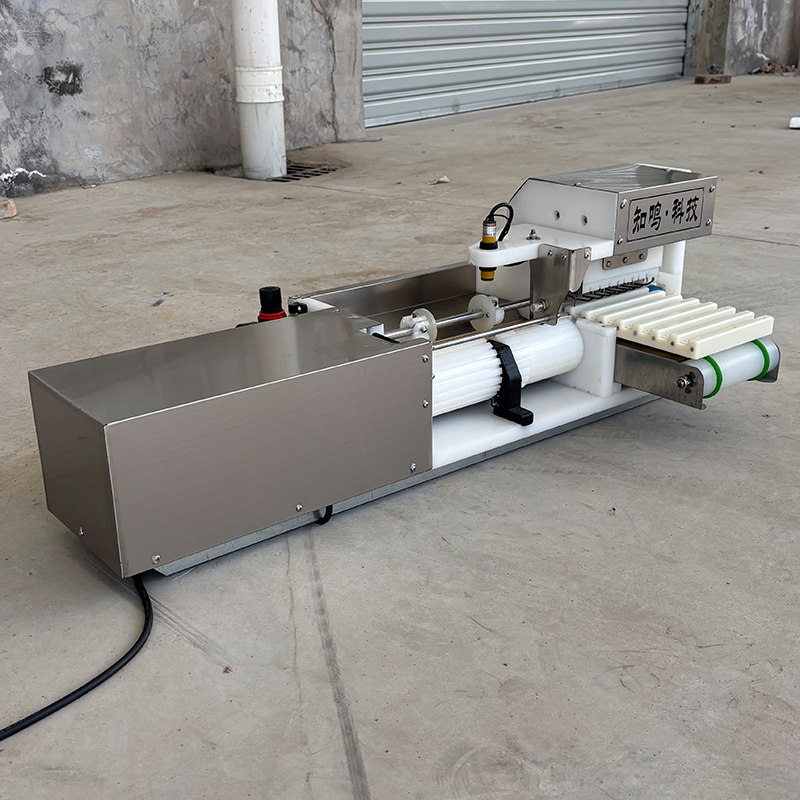
Existing photograph from the skewer machine product page. The holder and stick must be confirmed against the proposed kebab specification.
Specify the finished kebab as an assembled product
Send a drawing or clear photograph showing the ingredient sequence, number of pieces, occupied length on the stick and exposed handle length. Include the normal size range of the meat pieces, not only an ideal cube. A meat-only kebab and an alternating meat-and-vegetable product may require different loading arrangements.
A holder supports a particular presentation of those ingredients. Its suitability depends on the actual pattern and piece dimensions. Do not assume that a holder used for one demonstration supports every shrimp, offal or tofu product listed as a possible application.
| Specification to agree | What to supply | Why it changes the quotation |
|---|---|---|
| Stick | Material, overall length, diameter, tip style and representative sticks from the intended supply | The feeder, guide and holder must work with the supplied stick; nominal length alone does not establish compatibility. |
| Ingredient pattern | Piece size range, number and sequence, finished food length and exposed handle length | Defines the space occupied in the holder and the path the stick must pass through. |
| Finished-product acceptance | Position of the stick, retained ingredients, damage, permitted rejects and tray arrangement | Makes it possible to judge the complete kebab rather than merely count insertion cycles. |
| Production responsibility | Who cuts, loads, replenishes, collects, inspects and packs | Separates the machine function from the staffing and other equipment needed for the whole job. |
The listed JX-100 configuration supports skewers up to 300 mm long and approximately 3.0–3.5 mm in diameter, according to the linked product specifications. These are screening figures for that configuration, not confirmation for every stick material, straightness or ingredient arrangement. Confirm the actual samples and final holder before ordering.
Test the stick and ingredient combination together
Use the sticks that production intends to purchase and representative prepared ingredients. Record the stick specification and ingredient condition with the holder identification. Observe missed feeds, off-center insertion, damaged pieces, stick breakage and products that require manual correction.
Check several ordinary products across the run rather than a selection of the neatest examples. Keep rejected skewers in the count. If an ingredient slides, rotates or breaks during normal collection, record where that occurs. A completed insertion is not sufficient if the assembled product no longer matches its intended pack.
For upstream preparation, our fresh and tempered meat dicing results guide discusses the condition and dimensions of meat cubes. That preparation question is separate from whether a skewer passes through the arranged ingredients correctly.
Compare the complete work cycle, not only insertion speed
Define the start and end of the timed process with each supplier. For example, the comparison may start with prepared ingredients and sticks at the station and end with accepted kebabs in a collection tray. If one proposal includes cutting or retail packing and another does not, record those differences before comparing staffing.
Include ordinary holder loading, stick replenishment, collection, inspection and interruptions within the chosen boundary. Record the number of people involved and time spent by each. Run long enough to observe these recurring activities; the insertion cycle alone does not show whether loading can keep up.
Accepted skewers per labor-hour = accepted finished skewers ÷ total person-hours within the agreed boundary. Add the time contributed by all staff in that boundary rather than dividing by the time of only the person pressing the control. This is a proposed comparison measure, not a claimed labor saving.
Consider the receiving operation as well. A machine can finish an insertion while the operator is still arranging the next holder or collecting the previous product. Additional automation is useful only when it addresses an observed constraint and the proposed configuration includes it.
Resolve installation and product changes before ordering
Confirm the working height, loading and collection space, electrical supply and access needed for cleaning under the supplied instructions. The product description mentions a pneumatic system; request the actual air supply requirements and what equipment is included in the quotation. Do not infer compressor size or operating pressure from a machine photograph.
Can the same holder run meat-only and mixed kebabs?
It needs confirmation with both arrangements. Piece dimensions, sequence and the food length on the stick change the presentation. Provide both product drawings and ask which holder or configuration changes are included.
Does automatic insertion remove all hand work?
No. For this described setup, ingredient arrangement remains manual. Evaluate that work together with replenishment and collection when estimating staffing. A broader automation claim should be tied to an explicitly quoted system.
Send a complete skewering brief
Provide ingredient types and preparation condition, piece dimensions, pattern, actual stick samples or specification, food and handle lengths, target accepted output, current staffing and collection or packing method. Add the destination country, electrical and available air supply details, and station layout.
Send Jiaxuan Machinery your kebab layout, stick specification and workflow requirements to discuss the holder and automation scope before comparing quotations.
Flowing: