

Inside Our Five-Size Root Vegetable Brush Washer-Peeler Range
Two buyers can ask for the same root vegetable brush washing and peeling machine and need very different results. One may want field soil removed from potatoes while keeping most of the skin. Another may need peeled sweet potatoes ready for slicing. We begin with that difference, because a larger machine will not solve a finish problem created by the wrong brush contact or processing time.
We define the finish before choosing a model
Inside the chamber, rotating brush rollers turn the roots while water helps carry away soil, loosened skin and residue. A shorter run may suit surface washing; more contact can increase peeling. The right setting depends on the vegetable’s firmness, skin thickness, shape, initial soil load, brush configuration, water supply and batch weight. Ginger’s grooves, for example, make its cleaning challenge different from that of a smooth potato. A soft or thin-skinned ingredient can lose usable flesh if it receives the same treatment as a tough root.
When we discuss a line, we ask whether the acceptable result is washed with skin retained, lightly peeled or peeled for the next cutting or cooking step. Those are practical descriptions, not a claim that one fixed setting produces the same finish on every crop. Our root vegetable brush washing and peeling machine is intended for firm products such as potatoes, carrots, sweet potatoes, ginger, taro and radishes; leafy vegetables and soft ripe fruit need a gentler process.
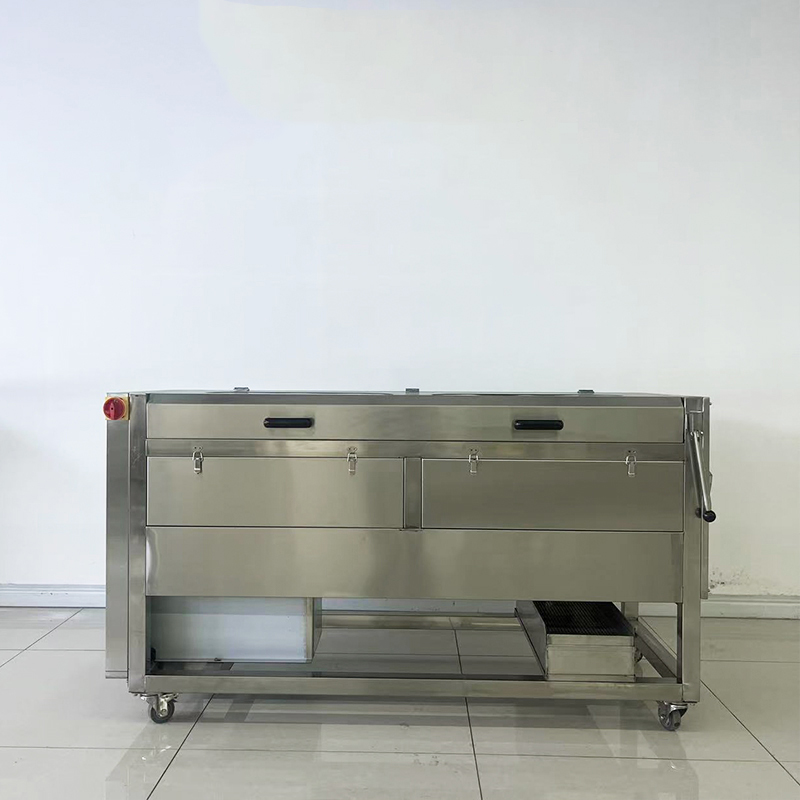
The side-view photo shows the equipment body. The required surface finish should be checked with the buyer’s own raw material.
Five sizes: compare a batch, not just an hourly number
The range offers Type45, Type60, Type80, Type100 and Type150. Here are the figures in our equipment specifications. A batch feed range tells you how much material the chamber is designed to take at one time; the listed hourly capacity is a reference for planning, not a guaranteed output for every vegetable and peeling target.
| Type | Batch feed | Listed capacity | Motor power |
|---|---|---|---|
| Type45 | 10–12 kg | 150 kg/h | 0.75 kW |
| Type60 | 15–20 kg | 350 kg/h | 0.75 kW |
| Type80 | 35–40 kg | 410 kg/h | 1.1 kW |
| Type100 | 40–50 kg | 550 kg/h | 1.1 kW |
| Type150 | 100–110 kg | 750 kg/h | 1.5 kW |
For the JX-150 configuration, we specify 110 kg per batch at the upper end of the Type150 range, with a listed 750 kg/h output and 1.5 kW motor power. We would not multiply batch size by an assumed number of cycles and present that as a buyer’s actual shift output. Loading, processing, discharge, inspection and cleaning all take time; stronger peeling can take longer than washing.
What a useful sample run should answer
A short demonstration is valuable when it shows the incoming and outgoing product clearly. For a purchase decision, we would use representative material from the buyer’s normal supply and agree on the acceptance standard before the trial. Then we would record:
-
Input condition: crop and variety, size range, soil level, skin condition and weight loaded per batch.
-
Process setting: brush configuration, water supply and time from loading to discharge.
-
Finished product: remaining soil or skin, uneven spots, surface damage and usable weight after processing.
-
Line fit: the time and handling needed to move the batch to slicing, dicing, cooking or packing, plus access for removing peel and cleaning the chamber.
We would compare several ordinary pieces, not only the cleanest potato in a photograph. If the target is skin-on washed produce, too much peeling is a loss. If the target is fully peeled produce for dicing, remaining skin may create rework. The trial should make that trade-off visible.
How the next operation changes the choice
For a central kitchen washing potatoes for later cooking, we would first check whether the brushes remove soil without taking away more skin than necessary. For a fresh-cut operation that will dice peeled roots, we would pay closer attention to the acceptable remaining peel, usable yield and whether batches arrive at the dicer consistently. These are two different selection questions even if both buyers quote the same daily tonnage.
Only after agreeing on the finish would we compare that target volume with the five batch sizes and the available space, water, drainage and electrical supply. A smaller model may suit a modest or varied schedule; a larger chamber may suit heavier, more regular batches. Neither conclusion replaces a trial with the actual crop.
If you are planning a root-vegetable preparation line, send us your raw-material photos, desired finish and target shift volume. We can use those details to identify a sensible starting model and agree on what a sample run needs to prove. The equipment video is also available on the linked product page, alongside the model information.
Flowing: